

















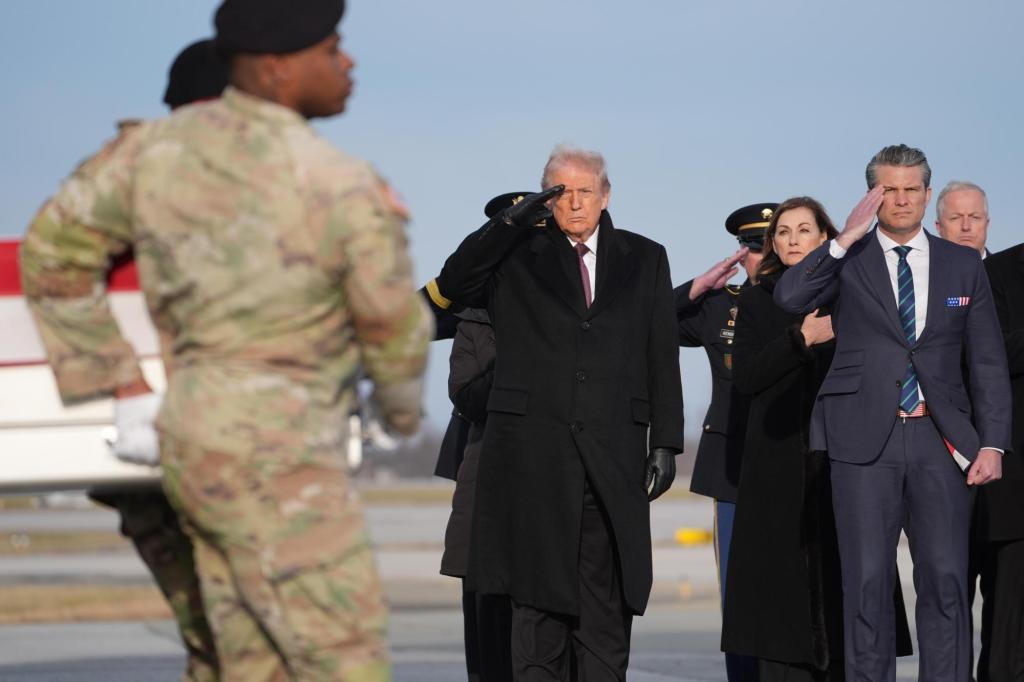

Honoring Fallen Heroes: A Dignified Transfer Ceremony at Dover Air Force Base
In the somber atmosphere of Dover Air Force Base, a poignant ritual unfolded as President Donald Trump honored the lives of two Iowa National Guard members and a U.S. civilian interpreter who tragically lost their lives in Syria. This ceremony, known as a dignified transfer, is a moment steeped in respect and reverence for those who have made the ultimate sacrifice in service to their country. Have you ever wondered what goes into such a heartfelt farewell? Let’s explore the details surrounding this emotional event and the lives of the fallen heroes.
The ceremony took place following the return of the service members’ remains from the Syrian desert, where they were killed in an attack. The families of these brave individuals gathered to pay their respects, alongside state officials and military leaders. It’s a moment that encapsulates the deep sorrow and pride felt by the nation.
Understanding the Dignified Transfer Process
During a dignified transfer, the president’s role is primarily to bear witness to the ceremony. While the atmosphere is charged with emotion, the event itself is meticulously choreographed. Here’s how it typically unfolds:
This ritual serves as a powerful reminder of the sacrifices made by service members and their families, ensuring they receive the honor they deserve.
Remembering the Fallen Heroes
The two Iowa National Guard members, Sgt. Edgar Brian Torres-Tovar and Sgt. William Nathaniel Howard, were celebrated for their dedication and bravery. Torres-Tovar, just 25 years old, was remembered as a family-oriented individual who always prioritized others. In contrast, Howard, aged 29, had aspired to be a soldier since childhood. His stepfather spoke of him as a devoted husband and a man of strong faith.
Moreover, Ayad Mansoor Sakat, the civilian interpreter killed in the attack, was honored as a courageous individual who had supported U.S. forces during the Iraq invasion. His family, who immigrated to the U.S. on a special visa, expressed their disbelief at the loss, highlighting his unwavering commitment to his work and family.
Trump’s Commitment to Honor and Retaliation
In the wake of the attack that claimed these lives, President Trump expressed his sorrow and vowed to seek justice. It’s crucial to understand the context of this incident, as it followed a period of improving relations between the U.S. and Syria. This complicated political backdrop adds layers to the tragedy, raising questions about the implications for U.S. foreign policy and military strategy.
The president’s visits to Dover during his term reflect his acknowledgment of the heavy responsibilities that come with leadership. Over the years, he has attended several similar ceremonies, each time underscoring the weight of loss felt by families and the nation.
The Impact on Families and Communities
The pain experienced by the families of the fallen heroes resonates deeply within their communities. Iowa’s governor and congressional representatives attended the transfer, signaling the collective grief and support from fellow citizens. Such events remind us of the human cost of conflict and the importance of standing with those who serve.
As we reflect on the sacrifices made by these individuals, it’s vital to engage in conversations about the implications of military actions abroad. How can we ensure that such losses are not in vain? This incident serves as a call to honor their memory through meaningful dialogue and action.