

















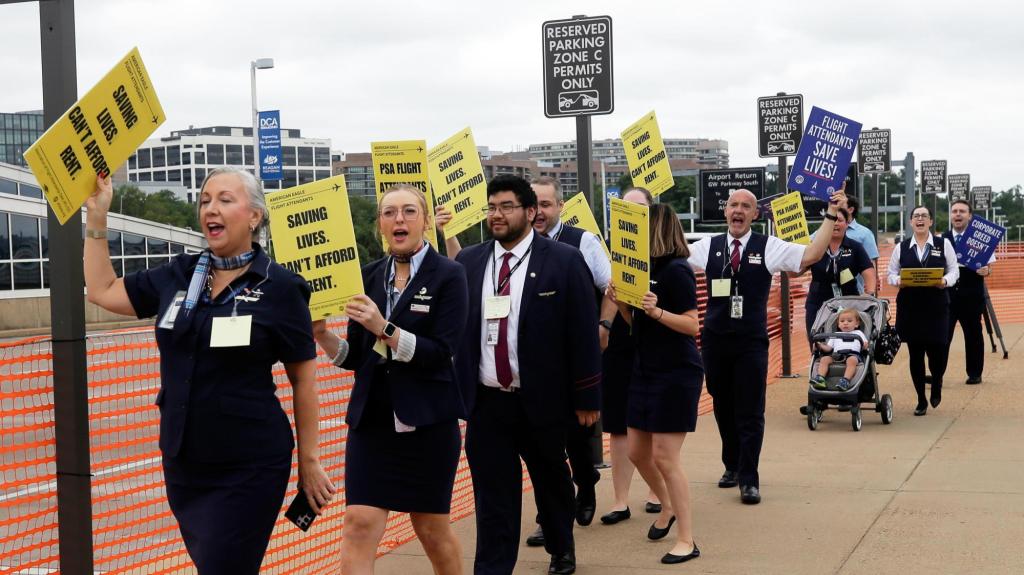

At the heart of the airline industry, flight attendants are facing significant challenges that are often overlooked. For many, like Nathan Miller, a 29-year-old flight attendant for PSA Airlines, the job comes with a heavy emotional and financial toll. Despite working tirelessly, Miller, who earns around $24,000 annually, finds himself commuting from Virginia to Philadelphia, struggling to make ends meet. How can it be that those entrusted with passenger safety and comfort are often underpaid and undervalued?
This article delves into the ongoing struggles of flight attendants, highlighting their frustrations over wages, working conditions, and the hurdles they face in advocating for better treatment. With recent events in the airline industry drawing attention to these issues, it’s vital to understand what flight attendants endure behind the scenes.
Flight Attendants: A Growing Discontent
Flight attendants across the U.S. are voicing their concerns about stagnant wages and demanding working conditions. Many, like Miller, find that their earnings don’t reflect the hard work and dedication they put into their roles. They often juggle multiple responsibilities, from ensuring passenger safety to managing in-flight emergencies. This is not just a job; it’s a demanding profession that requires a diverse skill set.
On top of the low salaries, flight attendants are frustrated by the lack of pay for essential ground duties, such as boarding and deplaning passengers. This situation is compounded by the long negotiation processes that unions face, often dragging on for years without a resolution.
Recent Strikes and Their Implications
Recently, Air Canada flight attendants made headlines by staging a massive strike, which resulted in the cancellation of over 3,000 flights. Their activism led to a tentative agreement that included wage increases and, notably, compensation for boarding passengers. However, in the U.S., the Railway Labor Act complicates similar actions, making strikes a rare occurrence for airline workers.
Unlike other sectors that have successfully organized strikes, such as Hollywood writers or factory workers, U.S. airline staff can only strike under specific conditions. This legal framework has weakened the bargaining power of unions, leading to prolonged negotiations.
The Weight of Responsibilities
Flight attendants’ roles have evolved significantly. Today, they are responsible for much more than serving meals and drinks. They are trained to handle various emergencies, including medical crises and aircraft evacuations. Understanding how to manage these critical situations is part of their job, yet many feel that their compensation does not reflect the risks and responsibilities they undertake daily.
Becky Black, a fellow flight attendant, emphasizes the importance of being prepared for emergencies at 30,000 feet. Nevertheless, she and her colleagues feel that their pay does not align with the value they provide.
Contract Negotiations and the Future
Negotiations for better pay and working conditions have become increasingly protracted. For instance, flight attendants at PSA Airlines have been negotiating for over two years without a satisfactory resolution. Meanwhile, other airlines like Southwest have finally reached agreements after lengthy bargaining periods, resulting in significant wage increases and new parental leave policies.
However, many attendants remain without updated contracts, highlighting the ongoing struggle for fair treatment within the industry. The push for boarding pay remains a critical issue, as many attendants argue they should be compensated for the most demanding parts of their shifts.
Personal Stories: The Human Element
At the end of the day, the stories of flight attendants like Nathan Miller reflect a larger trend within the industry. He has always admired the role of flight attendants, yet finds himself questioning whether he can continue in a job that he loves but doesn’t sustain him financially.
In a profession where the stakes are high, the ongoing challenges faced by flight attendants are a call to action. As the industry evolves, so too must the recognition and compensation for those who ensure that air travel remains safe and efficient.