



















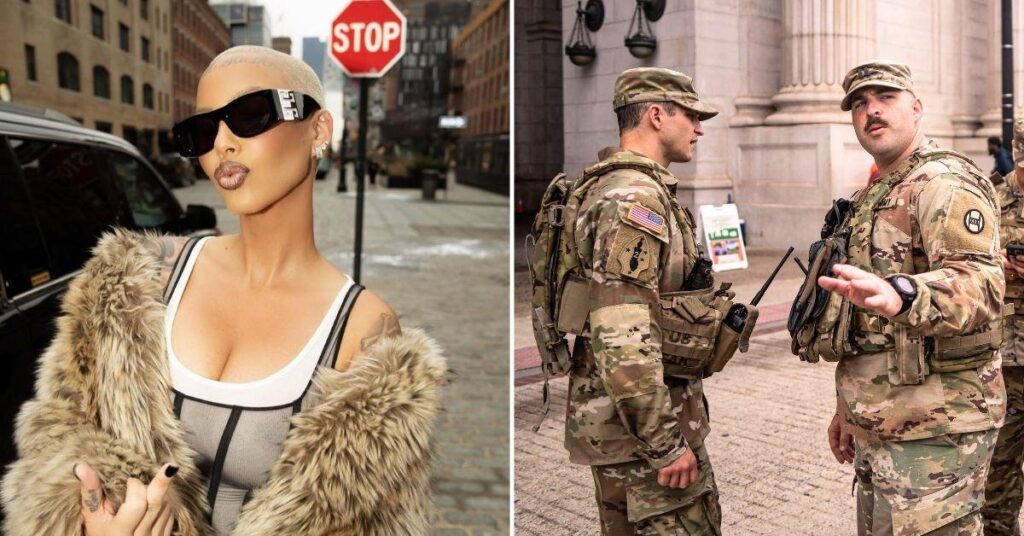
Amber Rose has sparked quite a conversation by defending Donald Trump’s choice to deploy National Guard troops in Washington D.C. Her remarks highlight a contentious debate surrounding race, politics, and the role of law enforcement. But what does this really mean for the ongoing discussions about social justice and equality in America? In this article, we’ll explore the implications of her statements, the context of the National Guard’s involvement, and the broader dialogue about race and politics.
Understanding Amber Rose’s Perspective
Amber Rose, a prominent media personality, voiced her support for Trump’s decision, shedding light on what she describes as the hypocrisy of some white liberals. She argues that their criticisms often lack a genuine understanding of the challenges faced by communities of color. By calling out these so-called «racist» attitudes, she raises essential questions about who gets to define social justice.
So, what does she mean by this? Rose suggests that certain individuals may advocate for change but fail to recognize their privilege, leading to a disconnect in the conversation. This perspective challenges the narrative that often dominates public discourse and encourages a more nuanced understanding of race relations.
The Role of the National Guard
The National Guard’s presence in D.C. during times of unrest has become a focal point for many discussions. Some see it as a necessary measure for maintaining order, while others criticize it as an overreach of government power. The decision to mobilize these troops often comes under scrutiny, especially in the light of recent protests and civil unrest.
These questions are vital as they push us to examine the underlying motives behind such actions.
Racial Dynamics in Political Discourse
The intersection of race and politics remains a hot-button issue in America. Many activists argue that the discourse is often dominated by voices that do not represent the communities most affected by these policies. Rose’s comments highlight a critical aspect of this dynamic—who participates in the conversation and whose voices are amplified.
It’s important to consider how race influences perceptions of authority and security. When the National Guard is deployed, it can evoke different reactions depending on one’s racial background. This disparity can lead to misunderstandings and further polarize public opinion.
Engaging with Controversial Opinions
Rose’s defense of Trump’s actions isn’t just about a single political decision; it’s part of a larger discourse about race and power. Engaging with controversial opinions can be uncomfortable, but it’s crucial for a well-rounded understanding of societal issues.
Many people may disagree with her stance, yet the conversation she provokes is essential. Why do we shy away from discussing uncomfortable truths? How can we foster a more inclusive dialogue that addresses these complexities?
By examining different viewpoints, we can enrich our understanding of the multifaceted nature of race and politics. This approach not only broadens our perspectives but also encourages empathy and understanding among diverse groups.
In this intricate landscape, Amber Rose’s comments serve as a reminder that conversations about race and politics are often more complicated than they appear. They challenge you to think critically about your own beliefs and the societal structures at play.