


















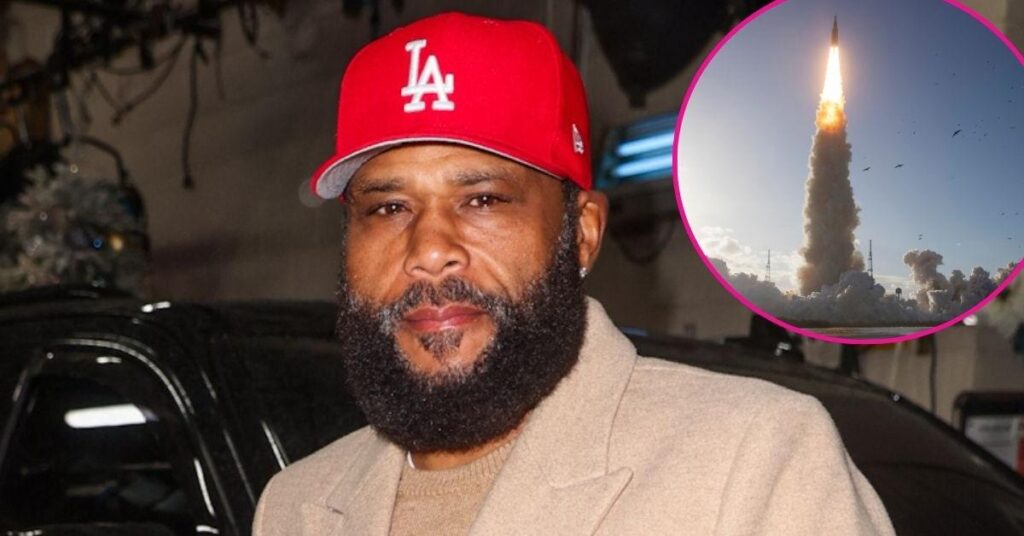
Anthony Anderson Critiques NASA’s Moon Mission: A Waste of Resources?
Have you ever wondered if the billions spent on space exploration could be better used here on Earth? Recently, actor Anthony Anderson made headlines with a bold statement, questioning the value of NASA’s ambitious mission to the moon. On April 7, during a political commentary, he expressed his concerns about the astronomical costs involved in such projects. With so many pressing issues facing society today, is it time to rethink our priorities in space exploration?
In this article, we’ll delve into Anderson’s criticisms, explore the financial implications of lunar missions, and examine the broader context of space exploration funding. From environmental issues to education, we’ll discuss whether investing in space is a wise use of taxpayer money or a costly endeavor that diverts attention from urgent needs.
Understanding the Critique: Anderson’s Perspective
Anthony Anderson’s remarks sparked a significant conversation about priorities. He argues that while space exploration is undoubtedly fascinating, the financial burden it places on taxpayers is hard to justify. He suggests that these funds could address critical issues like poverty, education, and healthcare. Isn’t it worth considering where our money goes?
The Financial Picture: Is Space Exploration a Wise Investment?
When we look at the budget allocated for lunar missions, it’s staggering. NASA’s costs can reach billions, and this raises the question: what could we achieve with that money back on Earth? Let’s break it down:
The reality is that every dollar spent on space is a dollar that could have gone to address immediate societal challenges.
The Broader Context of Space Exploration Funding
While Anderson’s critique is compelling, it’s essential to look at the bigger picture. Space exploration has historically led to technological advancements that benefit life on Earth. For instance, innovations in telecommunications, weather forecasting, and even medical technologies have roots in space research. But does this justify the expense?
Moreover, public interest in space missions can inspire future generations. Could the excitement of lunar missions motivate young people to pursue careers in STEM fields? This potential benefit adds another layer to the discussion.
Public Opinion: A Divided Perspective
Public sentiment on space exploration is mixed. Some individuals share Anderson’s concerns about the allocation of resources. On the other hand, many believe that exploring the cosmos is a necessary endeavor. Is there a middle ground?
Many argue that investments in space can coexist with funding for social issues. The challenge lies in striking the right balance. How can we ensure that while we reach for the stars, we also take care of the planet?
In summary, as debates continue about the merits of NASA’s moon mission, it’s crucial to consider all angles. Anderson’s critique invites a broader dialogue about our priorities, the value of scientific exploration, and how we can harmonize these pursuits with pressing needs here on Earth.