



















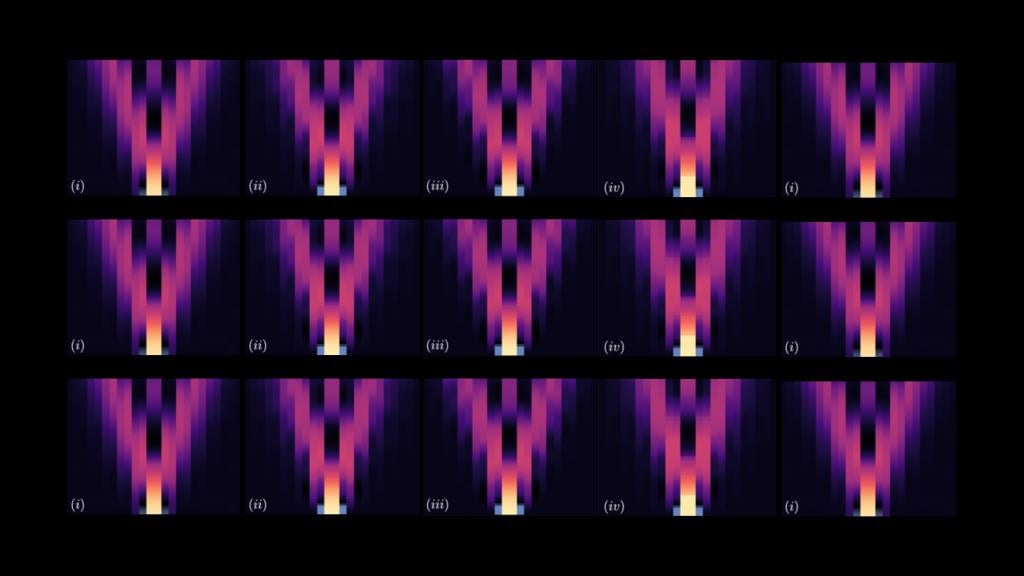
Quantum simulations are revolutionizing our comprehension of the universe at the smallest scales. Have you ever pondered what happens when subatomic particles collide? It’s a realm filled with mysteries, and thanks to recent advancements in quantum computing, researchers are beginning to unlock these secrets. In this article, we’ll explore how these simulations are reshaping our understanding of particle physics, the implications for future research, and the potential applications beyond the realm of science.
Quantum simulations allow scientists to model complex interactions that traditional methods struggle to analyze. By harnessing the power of quantum mechanics, researchers can create detailed representations of particle behavior during collisions. This innovative approach not only enhances our understanding but also paves the way for groundbreaking discoveries in various scientific fields.
Understanding Quantum Simulations
So, what exactly are quantum simulations? In simple terms, they utilize quantum algorithms to predict the behavior of particles at an atomic scale. Unlike classical simulations, which may simplify or overlook intricate interactions, quantum simulations can accommodate the strange and often counterintuitive nature of quantum mechanics.
These simulations enable scientists to visualize particle interactions in ways that were previously unimaginable. Through this advanced modeling, researchers can analyze phenomena such as particle decay, scattering, and other processes that define our universe.
The Role of Subatomic Particle Collisions
When subatomic particles collide, they create an array of outcomes, some of which can lead to the discovery of new particles or forces. Understanding these collisions is crucial for answering fundamental questions about the universe’s origins and its fundamental forces.
For example, the Large Hadron Collider (LHC) has been instrumental in studying these collisions, revealing insights like the Higgs boson. Yet, even with such powerful tools, traditional methods can be limited in their ability to interpret complex data.
Implications for Future Research
The integration of quantum simulations into particle physics research opens exciting pathways for exploration. Researchers can now delve deeper into topics like dark matter and energy, which remain elusive.
By simulating different collision scenarios, scientists can test theories that may lead to significant breakthroughs. This could enhance our understanding of the universe’s composition and the forces that govern it.
Applications Beyond Particle Physics
Moreover, the impact of quantum simulations extends beyond particle physics. As these techniques evolve, they hold promise for various fields such as materials science, cryptography, and even artificial intelligence.
Imagine creating new materials with tailored properties or developing ultra-secure communication systems. The possibilities are vast and could lead to innovations that change our daily lives.
In summary, quantum simulations are not just a tool for researchers; they represent a paradigm shift in how we understand the fundamental workings of our universe. As this technology continues to advance, who knows what other secrets of the cosmos we will uncover? The journey is just beginning, and it’s one that promises to redefine our understanding of reality itself.