



















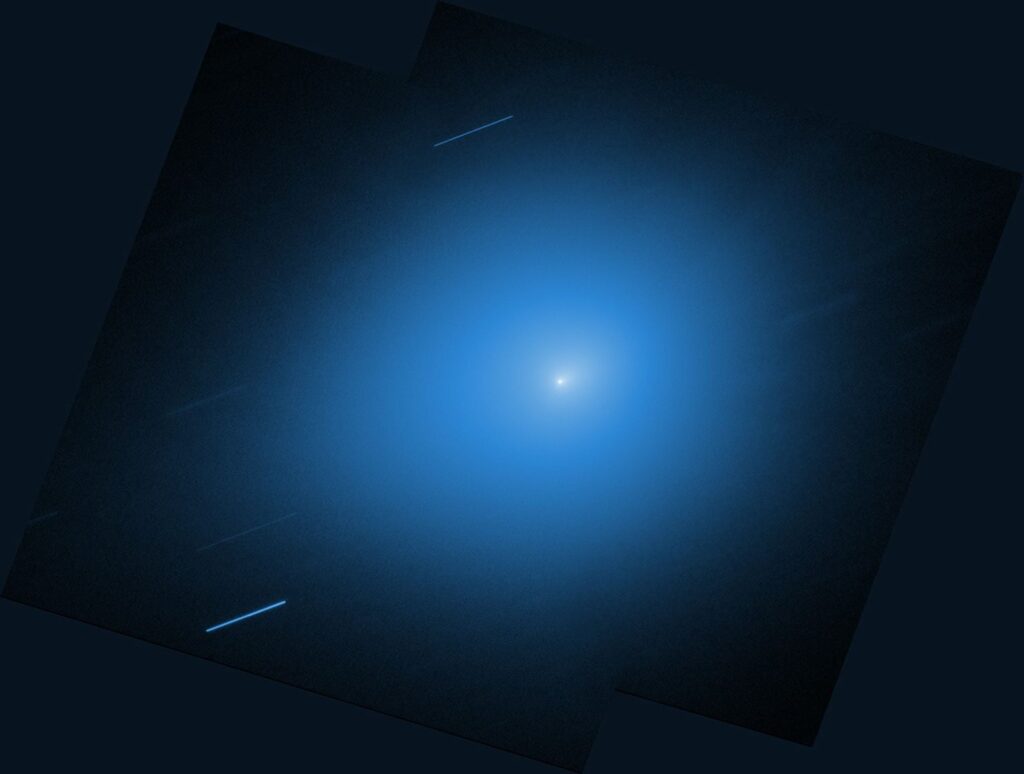
The interstellar comet 3I/ATLAS is making headlines as it prepares to exit our solar system for good. Have you ever wondered what it’s like to witness a visitor from another star? This unique celestial object has captivated astronomers and space enthusiasts alike with its intriguing journey. In this article, we’ll delve into what makes 3I/ATLAS so special, how it differs from typical comets, and what its departure means for both scientists and stargazers.
As we explore this comet’s fascinating characteristics, you’ll discover how 3I/ATLAS provides valuable insights into the cosmos. With its origins in another star system, this comet is a rare glimpse into the vastness of space beyond our own. So, let’s uncover the mysteries surrounding its journey and significance.
What Sets 3I/ATLAS Apart from Regular Comets
While many comets originate within our solar system, 3I/ATLAS is an interstellar traveler. This means it has ventured from another solar system, offering us a unique opportunity to study the materials and conditions from a different part of the universe.
– Unlike typical comets, which often have elliptical orbits, 3I/ATLAS follows a hyperbolic path.
– Its trajectory shows that it will not return, marking a one-time event in our astronomical history.
This comet is composed of ice, dust, and other materials, similar to its solar counterparts, but its journey hints at a vastly different past. Have you ever considered how such a visitor can reshape our understanding of cosmic formation?
Scientific Significance of Observing 3I/ATLAS
Observing 3I/ATLAS offers scientists a treasure trove of information. By studying its composition and behavior, researchers can glean insights into the building blocks of planets and the conditions that prevail in other star systems.
– The data collected can help us understand the origins of our own solar system.
– Additionally, this comet may provide clues about the processes that shape celestial bodies far beyond our reach.
These observations not only expand our knowledge but also challenge existing theories about the universe. Isn’t it fascinating to think that a single comet can influence our understanding of cosmic phenomena?
How to Observe 3I/ATLAS
If you’re wondering how you can catch a glimpse of this interstellar marvel, you’re in luck! As it travels through our solar system, it becomes visible to amateur astronomers and curious minds alike.
– Check local astronomy clubs or observatories for viewing events.
– Use telescopes or even high-powered binoculars to enhance your experience.
Even if you’re not an expert, simply looking up at the night sky can be rewarding. The excitement of witnessing a celestial body on its final journey can connect you with the vastness of the universe in an extraordinary way.
The Future of Interstellar Research
The journey of 3I/ATLAS raises questions about future interstellar exploration. With advancements in technology, scientists are eager to explore more interstellar objects.
– Upcoming missions aim to send probes to distant comets and asteroids.
– This could provide even richer data about the universe beyond our solar system.
The excitement surrounding 3I/ATLAS may pave the way for future discoveries. Are you ready to join this cosmic adventure? The thrill of unraveling the mysteries of the universe is just beginning, and each new discovery brings us closer to understanding our place in it.