


















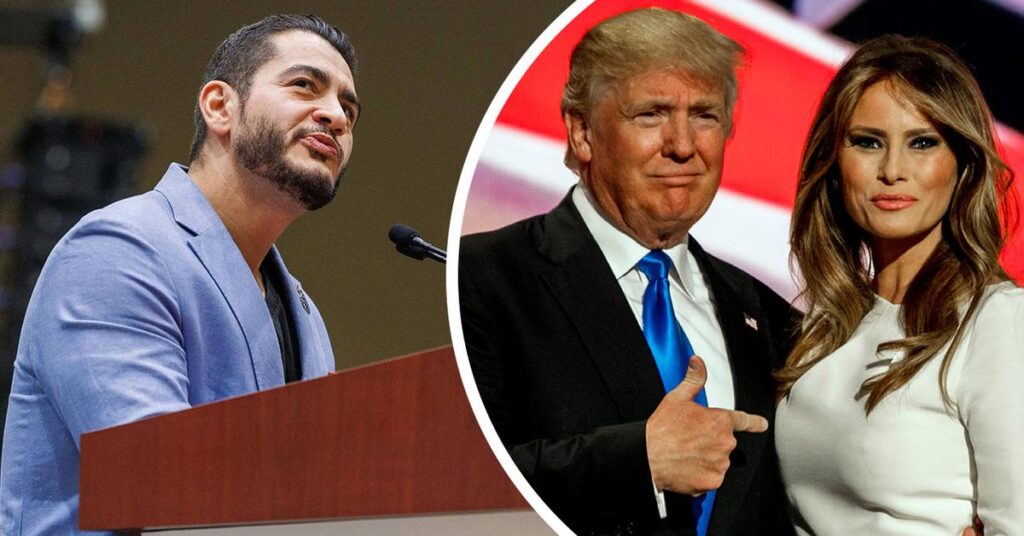
Democratic Senate hopeful Abdul El-Sayed recently made headlines by criticizing Donald and Melania Trump, referring to them as «overlords who don’t like each other.» This statement has sparked conversations about the dynamics of power in politics and the personal relationships of those in high office. But why does this matter? How do personal conflicts influence political landscapes? In this article, we’ll delve into El-Sayed’s remarks, their implications, and what they reveal about current political tensions.
Understanding Abdul El-Sayed’s Perspective
Abdul El-Sayed, a prominent figure in the Democratic Party, has been vocal about his views on the Trump administration. He believes that personal animosities among leaders can reflect broader societal issues. When he labels Donald and Melania Trump as «overlords,» he highlights a perception of detachment from the everyday struggles of citizens. But what does this mean for voters? It suggests an elite class that might not fully grasp or empathize with the concerns of the general public.
The Impact of Personal Relationships in Politics
Politics is often seen as a game of strategy, but personal relationships play a crucial role. When leaders don’t get along, it can lead to gridlock and ineffective governance. El-Sayed’s comments remind us that the interpersonal dynamics among politicians can directly affect policy-making and public trust.
- Conflict can lead to dysfunction: If key figures in government are at odds, it often results in stalled legislation.
- Public perception matters: Voters want to see unity and collaboration, not discord.
- Personal stories resonate: When leaders are relatable, they often gain more support from constituents.
El-Sayed’s Call for Change
By criticizing the Trumps, El-Sayed is advocating for a shift in political culture. He emphasizes the importance of connection and understanding among leaders and their constituents. This perspective is particularly relevant in an era where many feel disconnected from their representatives.
So, what can we take away from his remarks? They serve as a reminder that empathy and genuine relationships are crucial in political environments. When leaders prioritize their personal relationships and the well-being of their citizens, it creates a more effective and trusted government.
The Broader Political Climate
El-Sayed’s comments reflect a growing frustration among voters regarding the current political climate. Many citizens are tired of the perceived elitism and lack of accountability. The disconnect between leaders and the public can result in disillusionment, which is why figures like El-Sayed are gaining traction.
He represents a younger generation of politicians who are striving for authenticity and connection. They aim to redefine what leadership looks like—moving away from the traditional, often combative style toward a more inclusive and understanding approach.
Conclusion
In essence, Abdul El-Sayed’s critique of Donald and Melania Trump is more than just a personal attack; it’s a call to action for greater empathy and connection in politics. By addressing the personal dynamics of those in power, he urges voters to seek leaders who prioritize unity over division. As the political landscape continues to evolve, voices like El-Sayed’s will remain essential in shaping a more engaged and connected government.