



















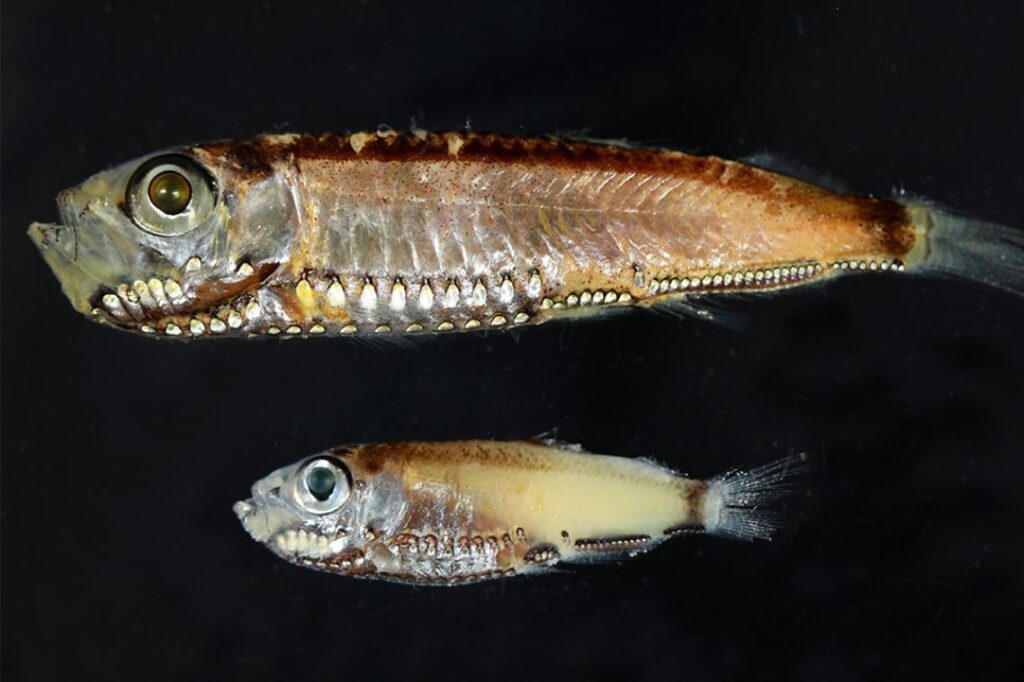
In the mysterious depths of our oceans, life continues to surprise us. Recent discoveries about deep-sea fish larvae have unveiled a new type of visual cell that could reshape our understanding of how these creatures navigate their dark environments. Have you ever wondered how fish thrive in such pitch-black waters where light barely penetrates? This groundbreaking research not only sheds light on the adaptations of marine life but also highlights the incredible resilience of nature.
In this article, we will explore the significance of these newly identified visual cells, their role in the survival of deep-sea fish, and what this means for our broader understanding of marine biology. Prepare to dive into the depths of scientific discovery and uncover the secrets of the ocean’s inhabitants.
Understanding the New Visual Cells
Recent studies have revealed that deep-sea fish larvae possess a unique type of visual cell. Unlike traditional rods and cones, these cells are specially adapted for low-light conditions. This discovery challenges long-held beliefs about how deep-sea creatures perceive their environment. Researchers found that these cells enable the fish to detect even the faintest light, providing them with a crucial advantage in their dark habitats.
But what does this mean for the fish? It suggests that these organisms have evolved sophisticated mechanisms to thrive where most life forms cannot. By adapting to their environments, they have developed survival strategies that are truly remarkable.
The Implications for Marine Life
So, why should we care about these visual cells? Understanding how deep-sea fish larvae see their world can provide insights into the evolutionary processes that shape marine ecosystems. Here are some implications of this discovery:
By grasping the intricacies of these adaptations, scientists can better appreciate the delicate balance of life in the ocean.
Challenges in Research
Investigating the mysteries of deep-sea environments isn’t easy. The depths of the ocean present numerous challenges, from extreme pressure to frigid temperatures. Additionally, the elusive nature of deep-sea organisms makes them difficult to study. Yet, researchers are undeterred. They use advanced techniques like deep-sea submersibles and specialized imaging equipment to gather valuable data.
Moreover, the findings emphasize the importance of ongoing exploration and research. As technology advances, who knows what other adaptations await discovery in the dark depths of our oceans?
The Future of Marine Research
Looking ahead, the study of these visual cells could pave the way for future research into not only deep-sea fish but also other marine species. With climate change and habitat destruction threatening oceanic ecosystems, understanding how these organisms adapt is more crucial than ever.
As we continue to uncover the secrets of the sea, the importance of preserving these habitats becomes increasingly clear. Protecting marine environments is essential for the survival of countless species, including those yet to be discovered.
So, the next time you think about the ocean, remember that it holds countless mysteries waiting to be explored. The more we learn, the better we can safeguard these precious ecosystems for generations to come.