



















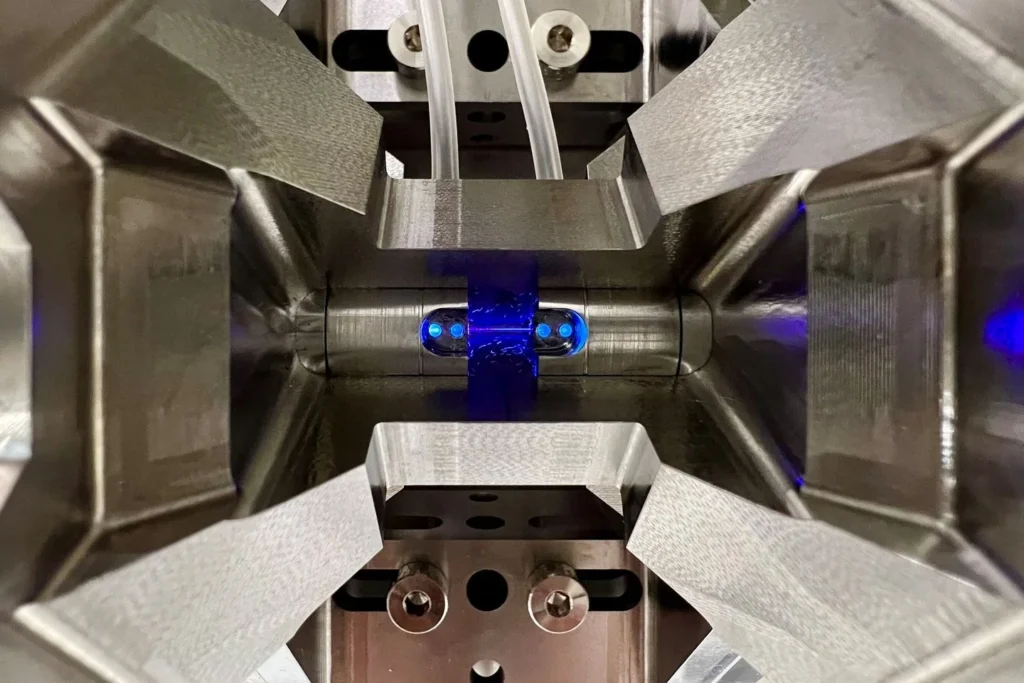
High-harmonic generation (HHG) has transformed the landscape of laser physics and X-ray technology, offering exciting possibilities for ultrafast imaging and spectroscopy. Have you ever wondered how some of the most sophisticated imaging techniques work? By utilizing HHG, researchers have been able to convert standard lasers into remarkable sources of attosecond X-ray pulses. These ultra-short bursts of light are not only groundbreaking but also essential for probing the dynamics of matter at unprecedented time scales.
In this article, we will delve into the mechanics of high-harmonic generation, explore its applications, and discuss the implications of helium as a medium for enhancing X-ray pulse generation. If you’re curious about how this technology is reshaping fields like materials science and biology, stick around as we unpack the fascinating world of attosecond physics.
Understanding High-Harmonic Generation
High-harmonic generation is a nonlinear optical process that occurs when an intense laser interacts with a gas. This phenomenon allows for the production of high-frequency light, specifically in the X-ray region of the spectrum. But how does it actually work? As the laser pulse propagates through the gas, it ionizes atoms, freeing electrons that are then accelerated by the electric field of the laser. When these electrons recombine with their parent ions, they emit energy in the form of X-ray photons.
Interestingly, HHG can produce light pulses that last only attoseconds, which is a quintillionth of a second! This ability to generate extremely short bursts of light enables scientists to capture rapid processes in real time. You might be asking yourself, what does this mean for practical applications?
Applications of Attosecond X-Ray Pulses
The advent of attosecond X-ray pulses has opened up a multitude of applications across various scientific disciplines. Here are some key areas where this technology is making waves:
Imagine being able to observe how electrons move during a chemical reaction or how they behave in a new material. That’s the promise of attosecond science!
Helium as a Medium for Enhanced Generation
One intriguing aspect of high-harmonic generation is the choice of gas used as the medium. Helium has emerged as a particularly effective medium for HHG, largely due to its simple atomic structure. The low ionization potential of helium allows for efficient electron acceleration and recombination, leading to enhanced X-ray pulse generation.
Moreover, helium’s properties minimize unwanted background noise, which is crucial for the clarity of the resulting X-ray pulses. This means researchers can achieve higher-quality data, which is essential for precision measurements. Have you considered how such advancements could impact future technologies?
The Future of Attosecond X-Ray Technology
The potential of attosecond X-ray technology is immense, and as research continues to advance, we can expect to see even more innovative applications. For example, the integration of HHG with advanced imaging techniques could lead to breakthroughs in observing complex biological processes and materials at the atomic level.
Furthermore, as scientists refine their methods for generating and utilizing these pulses, we may find new ways to harness their power for medical diagnostics, nanotechnology, and beyond. The possibilities are only limited by our imagination and the ongoing pursuit of knowledge.
In summary, high-harmonic generation, particularly when leveraged with helium, is paving the way for a deeper understanding of the ultrafast world around us. The implications of this technology are vast, making it an exciting time for researchers and industries alike. So, are you ready to explore the future of science through the lens of attosecond X-ray pulses?